


Top 30 PSC FAQs in Kenya: Applications, Interviews, Salaries & More Answered
Quick answer: This post answers the top PSC FAQs Kenya — how to apply, what documents you need,…
Quick answer: This guide explains the PSC recruitment process Kenya, from what the Public Service Commission does to where adverts appear and how to apply via the PSC portal. Follow the step‑by‑step advice below to prepare documents, register on PSCIMS, and submit an error‑free application.
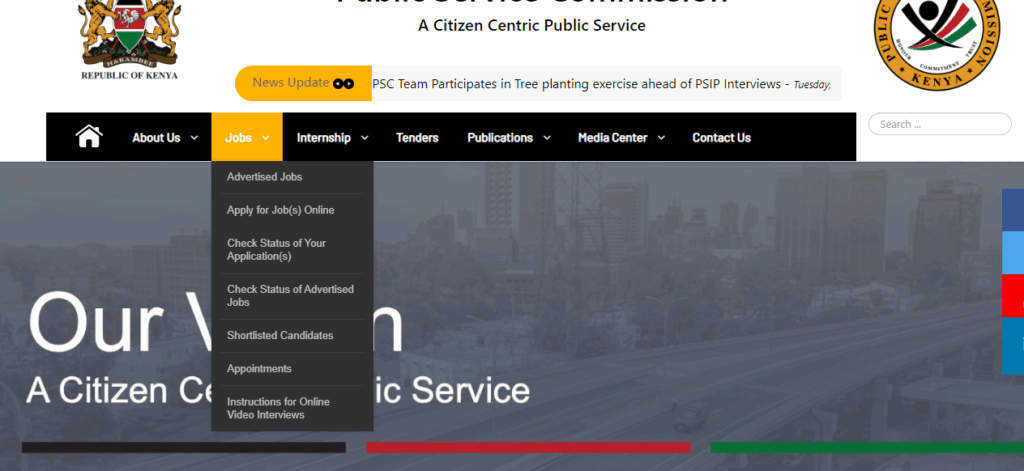
The Public Service Commission (PSC) is the constitutional body responsible for recruiting, appointing, and managing public servants across national and county governments. It sets recruitment standards, publishes vacancies, and oversees merit‑based selection to promote a values‑driven public service. PSC adverts and official guidance are the authoritative source for eligibility, job descriptions, and timelines.
The PSC recruitment lifecycle follows a clear sequence: advert publication → eligibility check → application submission → shortlisting → assessment/interview → vetting (Chapter Six compliance) → appointment, deployment and probation. At each stage, panels and automated systems check that applicants meet the advert criteria; accurate documents and advert‑matched CVs significantly improve your chances of progressing. Expect application windows typically open for 2–4 weeks depending on the role’s seniority and urgency
PSC vacancies are published on the official PSC website and PSC jobs page; each advert includes a downloadable PDF with the advert reference, closing date, and full eligibility criteria. Many ministries, state agencies and county public service boards also repost PSC adverts — always confirm the advert reference and PDF on the PSC site before applying to avoid outdated or fraudulent listings. Related internal links: PSC jobs Kenya application , How Google for Jobs works for PSC vacancies , PSC job alerts Kenya.
All PSC applications are submitted through the PSCIMS portal. To apply successfully:
Quick link-ready checklist: PSC jobs Kenya application; PSC job portal apply; PSC application documents checklist; PSC CV format Kenya; PSC cover letter Kenya; PSC job alerts Kenya.
Shortlisting combines automated filtering and human panel review. Automated systems first screen for advert‑matched keywords, minimum qualifications, required licences, and years of experience. Applications that pass the automated stage move to a panel where assessors verify documents, score competency matches, and rank candidates against the advert’s published criteria. Panels use the advert’s competency framework and any published scoring rubric to award points for education, relevant experience, professional certificates, and demonstrable achievements. Link-ready internal references: PSC shortlisting criteria Kenya; PSC application documents checklist.
Panels prioritise evidence over claims. Strong applications: list measurable outcomes, include role‑relevant keywords from the advert, and attach certified, legible PDFs of required documents. Examples of high‑value evidence: quantified results (e.g., “reduced processing time by 30%”), professional licences, and sector‑specific certifications. Where adverts request specific competencies, map short bullet points in your application to those competencies to make scoring straightforward for assessors.
PSC interviews typically test three areas: competency (behavioural), technical knowledge, and public service values. Panels use structured questions and score answers against published competencies. Common formats include a short opening question (“Tell us about yourself”), competency scenarios, technical problem questions, and values‑based probes on integrity and accountability. Use the STAR method (Situation, Task, Action, Result) to present concise, evidence‑based answers and always link your response to the competency the panel is assessing. Link-ready internal references: PSC interview questions Kenya; PSC values Kenya.
Prepare 5–8 STAR stories that map to core PSC competencies: teamwork, accountability, service delivery, problem solving, and leadership. For technical roles, prepare short notes on sector‑specific standards, recent policy changes, or tools you use. Keep each STAR story to 60–90 seconds and include a measurable result where possible.
Assessment centres often include timed written tests: case studies, policy memos, numerical reasoning, or report writing. Approach written tasks by: (1) quickly outlining assumptions, (2) structuring answers with headings, (3) offering 2–3 options, and (4) recommending one solution with justification. Time management is critical—allocate minutes per section and leave time to proofread.
Group tasks evaluate communication, teamwork, and facilitation skills. Effective behaviours: summarise group points, invite quieter members to contribute, keep the group focused on the brief, and present a clear, concise conclusion. In role plays, treat the scenario as a real work interaction—ask clarifying questions, show empathy, and propose practical next steps.
Assessors use scoring rubrics that weight competencies, technical answers, and values. To maximise scores: answer the question asked, quantify impact, reference relevant policies or standards where appropriate, and demonstrate ethical decision‑making. Dress professionally, arrive early with certified copies of documents, and bring printed copies of your application and the advert.
Practical checklist before assessment day: prepare certified PDFs of documents; rehearse STAR stories; practice a timed written case; review the advert’s competency framework; confirm referee availability; and print application receipts and the advert PDF. Related posts to prepare with: PSC assessment center Kenya; PSC CV format Kenya; PSC referees Kenya.
Quick answer: Vetting under Chapter Six checks integrity and statutory clearances (EACC, HELB, KRA, CRB, DCI) before appointment; expect vetting to take several weeks to a few months depending on checks and agency backlogs.
Chapter Six compliance requires candidates to produce a set of statutory clearances that confirm fitness for public office. Typical documents requested include an EACC clearance, HELB clearance (where applicable), KRA tax compliance, a CRB/credit check, and a certificate of good conduct from the Directorate of Criminal Investigations (DCI) or police service depending on the advert. These clearances are standard for public service recruitment to enforce the Constitution’s leadership and integrity requirements. For step‑by‑step instructions on obtaining and preparing these documents, see PSC Chapter Six requirements and the PSC application documents checklist.
Vetting timelines vary by role and the number of checks required. Some clearances (e.g., KRA PIN verification) can be quick, while police or DCI checks and EACC vetting may take several weeks to months, especially when agencies have high volumes or require manual verification. The vetting process is also governed by statutory regulations that set procedures for background checks and may involve additional agency-specific steps. To avoid delays, submit certified, legible PDFs of each clearance early and confirm any expiry dates; keep copies of submission receipts and follow up with the contact points listed in the advert or portal.
A PSC appointment letter is the formal document confirming selection and sets out the job title, job group, salary scale, reporting line, start date, and any conditions of appointment. Read it carefully: it will state whether the appointment is conditional on successful vetting or medical clearance, the probation length, and any required documentation to be submitted before reporting. Keep the appointment letter and any annexes (terms of service, performance contract) as they form the basis for your employment record and future promotion considerations. For related HR terms and templates, see PSC HR terms Kenya and PSC application documents checklist.
Deployment refers to where you will be posted (national ministry, agency, or county). Secondment is a temporary transfer to another department or agency while retaining your substantive post. Probation is a trial period—commonly 6–12 months—during which performance is assessed against agreed KPIs and a performance contract; successful completion usually leads to confirmation in post, while poor performance can result in extension or termination. During probation, maintain clear records of achievements, request regular feedback, and ensure your line manager documents performance appraisals. For career progression and what to expect after confirmation, consult PSC probation Kenya and PSC career progression Kenya.
Link-ready checklist: PSC Chapter Six requirements; PSC application documents checklist; PSC HR terms Kenya; PSC probation Kenya.
The first 6–12 months are a probationary and induction period where you move from candidate to functioning public servant. Expect an induction programme that covers organisational structure, key policies, code of conduct, and your immediate duties. Early priorities are: complete any outstanding Chapter Six or medical clearances, meet your line manager to agree initial tasks, and familiarise yourself with internal systems and reporting lines. Keep a simple log of achievements and tasks completed — this becomes evidence during probation reviews. Related posts: PSC probation Kenya; PSC HR terms Kenya.
Most PSC appointments are accompanied by a performance contract that sets measurable KPIs for the probation period and beyond. KPIs should be specific, measurable, achievable, relevant and time‑bound (SMART). Typical KPIs include service delivery targets, turnaround times, compliance milestones, and teamwork or supervisory objectives. During probation you will have at least one formal appraisal meeting; use it to request clear expectations, agree reporting frequency, and ask for documented feedback. Keep copies of performance appraisals and any supporting evidence (reports, emails, project outputs) as these inform confirmation, extension, or promotion decisions. Related posts: PSC probation Kenya; PSC career progression Kenya; PSC application documents checklist.
Quick link-ready checklist: PSC application documents checklist; PSC CV format Kenya; PSC cover letter Kenya; PSC portal walkthrough; PSC shortlisting criteria Kenya; PSC interview questions Kenya; PSC assessment center Kenya; PSC Chapter Six requirements; PSC job alerts Kenya; PSC referees Kenya; PSC probation Kenya.
This comprehensive guide explains the PSC recruitment process Kenya from advert publication to onboarding. It shows what the Public Service Commission does, where adverts appear, how shortlisting works, what to expect at interviews and assessment centres, vetting and Chapter Six compliance, appointment and deployment, probation and performance appraisal, and practical tips to improve your chances at every stage. Internal link phrases include the post keyphrase plus the scheduled day for easy internal linking (e.g., PSC shortlisting criteria Kenya).
The Public Service Commission (PSC) is the constitutional body that advertises vacancies, sets recruitment standards, and oversees merit‑based selection for national and county public service roles. It publishes official adverts with job descriptions, advert references, closing dates and competency frameworks; always use the PSC advert PDF as the authoritative source when preparing your application. Related posts: PSC jobs Kenya application; PSC recruitment process Kenya.
The typical PSC recruitment lifecycle is: advert publication → eligibility check → application submission → shortlisting → assessment/interview → vetting (Chapter Six) → appointment → deployment and probation. Each stage has clear requirements and timelines; missing documents or mismatched qualifications are common reasons for delay or disqualification. For a portal walkthrough and document checklist, see PSC job portal apply and PSC application documents checklist.
PSC vacancies are published on the official PSC website and PSC jobs page and often republished by ministries, agencies and county public service boards. Always download the advert PDF and confirm the advert reference and closing date on the PSC site to avoid outdated or fraudulent listings. Related posts: PSC jobs Kenya application; How Google for Jobs works for PSC vacancies; PSC job alerts Kenya.
Applications are submitted through PSCIMS. Register with your National ID or passport, verify your email, and complete your profile before applying. Tailor your CV and answers to the advert keywords, upload clear PDF scans (named logically), copy the advert reference into the form, and save the submission receipt. For step‑by‑step help, see PSC job portal apply, PSC CV format Kenya, and PSC cover letter Kenya.
Shortlisting uses automated filters and human panel review. Automated systems rank CVs by keyword matches, minimum qualifications, licences and experience; panels then verify documents and score candidates against the advert’s competency framework. To improve ranking, mirror advert language and quantify achievements. See PSC shortlisting criteria Kenya and PSC application documents checklist.
Panels prioritize verifiable evidence: measurable results, relevant professional certificates, and clear links between your experience and the advert competencies. Use short, advert‑mapped bullet points in your application to make scoring straightforward for assessors.
Frequent causes of disqualification include missing or uncertified documents, failure to meet minimum requirements, poor scan quality, wrong file formats, administrative errors (wrong advert reference), late submissions, and inconsistent information. Avoid these by following PSC application documents checklist and submitting early.
Interviews test competency (behavioural), technical knowledge, and public service values. Panels use structured questions and score answers against published competencies. Use the STAR method (Situation, Task, Action, Result) to present concise, evidence‑based answers. Prepare 5–8 STAR stories mapped to core competencies. Related posts: PSC interview questions Kenya; PSC values Kenya.
Assessment centres may include written exercises, case studies, numerical reasoning, group tasks and role plays. For written tasks, state assumptions, outline options, recommend one solution and justify it. In group exercises, facilitate rather than dominate and summarise clearly. Review PSC assessment center Kenya for formats and scoring tips.
Chapter Six compliance typically requires an EACC clearance, KRA tax compliance, CRB/credit check, DCI/police certificate of good conduct, and HELB clearance where applicable. These documents confirm fitness for public office and are often requested before appointment. Prepare certified, legible PDFs and check expiry dates. See PSC Chapter Six requirements and PSC application documents checklist.
Vetting timelines vary: some checks are quick, while police/DCI and EACC verifications can take several weeks to months depending on agency backlogs. Submit clear documents early and follow up with the contact points listed in the advert to reduce delays.
A PSC appointment letter confirms selection and details the job title, job group, salary scale, reporting line, start date and any conditions (e.g., successful vetting or medical clearance). Read it carefully and retain it with annexes such as the performance contract. See PSC HR terms Kenya and PSC application documents checklist.
Deployment is your posting location; secondment is a temporary transfer; probation is typically 6–12 months during which performance is assessed against KPIs. Maintain a log of achievements, request regular feedback, and ensure appraisals are documented. Related posts: PSC probation Kenya; PSC career progression Kenya.
The induction and probation period covers orientation to policies, systems and immediate duties. Priorities include completing outstanding clearances, meeting your line manager to set expectations, and documenting early achievements to support probation reviews. See PSC probation Kenya and PSC HR terms Kenya.
Performance contracts set SMART KPIs for probation and beyond. Typical KPIs include service delivery targets, turnaround times and compliance milestones. Use appraisal meetings to clarify expectations and keep evidence (reports, emails, outputs) to support confirmation or promotion. See PSC career progression Kenya.
Action: Use this guide as your master checklist. Next, download the documents checklist, update your CV using the PSC CV format, and run through the PSC portal walkthrough before submitting your next application.
Quick answer: This guide explains the PSC recruitment process Kenya, from what the Public Service Commission does to where adverts appear and how to apply via the PSC portal. Follow the step‑by‑step advice below to prepare documents, register on PSCIMS, and submit an error‑free application.
The Public Service Commission (PSC) is the constitutional body responsible for recruiting, appointing, and managing public servants across national and county governments. It sets recruitment standards, publishes vacancies, and oversees merit‑based selection to promote a values‑driven public service. PSC adverts and official guidance are the authoritative source for eligibility, job descriptions, and timelines.
The PSC recruitment lifecycle follows a clear sequence: advert publication → eligibility check → application submission → shortlisting → assessment/interview → vetting (Chapter Six compliance) → appointment, deployment and probation. At each stage, panels and automated systems check that applicants meet the advert criteria; accurate documents and advert‑matched CVs significantly improve your chances of progressing. Expect application windows typically open for 2–4 weeks depending on the role’s seniority and urgency
PSC vacancies are published on the official PSC website and PSC jobs page; each advert includes a downloadable PDF with the advert reference, closing date, and full eligibility criteria. Many ministries, state agencies and county public service boards also repost PSC adverts — always confirm the advert reference and PDF on the PSC site before applying to avoid outdated or fraudulent listings. Related internal links: PSC jobs Kenya application , How Google for Jobs works for PSC vacancies , PSC job alerts Kenya.
All PSC applications are submitted through the PSCIMS portal. To apply successfully:
Quick link-ready checklist: PSC jobs Kenya application; PSC job portal apply; PSC application documents checklist; PSC CV format Kenya; PSC cover letter Kenya; PSC job alerts Kenya.
Shortlisting combines automated filtering and human panel review. Automated systems first screen for advert‑matched keywords, minimum qualifications, required licences, and years of experience. Applications that pass the automated stage move to a panel where assessors verify documents, score competency matches, and rank candidates against the advert’s published criteria. Panels use the advert’s competency framework and any published scoring rubric to award points for education, relevant experience, professional certificates, and demonstrable achievements. Link-ready internal references: PSC shortlisting criteria Kenya; PSC application documents checklist.
Panels prioritise evidence over claims. Strong applications: list measurable outcomes, include role‑relevant keywords from the advert, and attach certified, legible PDFs of required documents. Examples of high‑value evidence: quantified results (e.g., “reduced processing time by 30%”), professional licences, and sector‑specific certifications. Where adverts request specific competencies, map short bullet points in your application to those competencies to make scoring straightforward for assessors.
PSC interviews typically test three areas: competency (behavioural), technical knowledge, and public service values. Panels use structured questions and score answers against published competencies. Common formats include a short opening question (“Tell us about yourself”), competency scenarios, technical problem questions, and values‑based probes on integrity and accountability. Use the STAR method (Situation, Task, Action, Result) to present concise, evidence‑based answers and always link your response to the competency the panel is assessing. Link-ready internal references: PSC interview questions Kenya; PSC values Kenya.
Prepare 5–8 STAR stories that map to core PSC competencies: teamwork, accountability, service delivery, problem solving, and leadership. For technical roles, prepare short notes on sector‑specific standards, recent policy changes, or tools you use. Keep each STAR story to 60–90 seconds and include a measurable result where possible.
Assessment centres often include timed written tests: case studies, policy memos, numerical reasoning, or report writing. Approach written tasks by: (1) quickly outlining assumptions, (2) structuring answers with headings, (3) offering 2–3 options, and (4) recommending one solution with justification. Time management is critical—allocate minutes per section and leave time to proofread.
Group tasks evaluate communication, teamwork, and facilitation skills. Effective behaviours: summarise group points, invite quieter members to contribute, keep the group focused on the brief, and present a clear, concise conclusion. In role plays, treat the scenario as a real work interaction—ask clarifying questions, show empathy, and propose practical next steps.
Assessors use scoring rubrics that weight competencies, technical answers, and values. To maximise scores: answer the question asked, quantify impact, reference relevant policies or standards where appropriate, and demonstrate ethical decision‑making. Dress professionally, arrive early with certified copies of documents, and bring printed copies of your application and the advert.
Practical checklist before assessment day: prepare certified PDFs of documents; rehearse STAR stories; practice a timed written case; review the advert’s competency framework; confirm referee availability; and print application receipts and the advert PDF. Related posts to prepare with: PSC assessment center Kenya; PSC CV format Kenya; PSC referees Kenya.
Quick answer: Vetting under Chapter Six checks integrity and statutory clearances (EACC, HELB, KRA, CRB, DCI) before appointment; expect vetting to take several weeks to a few months depending on checks and agency backlogs.
Chapter Six compliance requires candidates to produce a set of statutory clearances that confirm fitness for public office. Typical documents requested include an EACC clearance, HELB clearance (where applicable), KRA tax compliance, a CRB/credit check, and a certificate of good conduct from the Directorate of Criminal Investigations (DCI) or police service depending on the advert. These clearances are standard for public service recruitment to enforce the Constitution’s leadership and integrity requirements. For step‑by‑step instructions on obtaining and preparing these documents, see PSC Chapter Six requirements and the PSC application documents checklist.
Vetting timelines vary by role and the number of checks required. Some clearances (e.g., KRA PIN verification) can be quick, while police or DCI checks and EACC vetting may take several weeks to months, especially when agencies have high volumes or require manual verification. The vetting process is also governed by statutory regulations that set procedures for background checks and may involve additional agency-specific steps. To avoid delays, submit certified, legible PDFs of each clearance early and confirm any expiry dates; keep copies of submission receipts and follow up with the contact points listed in the advert or portal.
A PSC appointment letter is the formal document confirming selection and sets out the job title, job group, salary scale, reporting line, start date, and any conditions of appointment. Read it carefully: it will state whether the appointment is conditional on successful vetting or medical clearance, the probation length, and any required documentation to be submitted before reporting. Keep the appointment letter and any annexes (terms of service, performance contract) as they form the basis for your employment record and future promotion considerations. For related HR terms and templates, see PSC HR terms Kenya and PSC application documents checklist.
Deployment refers to where you will be posted (national ministry, agency, or county). Secondment is a temporary transfer to another department or agency while retaining your substantive post. Probation is a trial period—commonly 6–12 months—during which performance is assessed against agreed KPIs and a performance contract; successful completion usually leads to confirmation in post, while poor performance can result in extension or termination. During probation, maintain clear records of achievements, request regular feedback, and ensure your line manager documents performance appraisals. For career progression and what to expect after confirmation, consult PSC probation Kenya and PSC career progression Kenya.
Link-ready checklist: PSC Chapter Six requirements; PSC application documents checklist; PSC HR terms Kenya; PSC probation Kenya.
The first 6–12 months are a probationary and induction period where you move from candidate to functioning public servant. Expect an induction programme that covers organisational structure, key policies, code of conduct, and your immediate duties. Early priorities are: complete any outstanding Chapter Six or medical clearances, meet your line manager to agree initial tasks, and familiarise yourself with internal systems and reporting lines. Keep a simple log of achievements and tasks completed — this becomes evidence during probation reviews. Related posts: PSC probation Kenya; PSC HR terms Kenya.
Most PSC appointments are accompanied by a performance contract that sets measurable KPIs for the probation period and beyond. KPIs should be specific, measurable, achievable, relevant and time‑bound (SMART). Typical KPIs include service delivery targets, turnaround times, compliance milestones, and teamwork or supervisory objectives. During probation you will have at least one formal appraisal meeting; use it to request clear expectations, agree reporting frequency, and ask for documented feedback. Keep copies of performance appraisals and any supporting evidence (reports, emails, project outputs) as these inform confirmation, extension, or promotion decisions. Related posts: PSC probation Kenya; PSC career progression Kenya; PSC application documents checklist.
Quick link-ready checklist: PSC application documents checklist; PSC CV format Kenya; PSC cover letter Kenya; PSC portal walkthrough; PSC shortlisting criteria Kenya; PSC interview questions Kenya; PSC assessment center Kenya; PSC Chapter Six requirements; PSC job alerts Kenya; PSC referees Kenya; PSC probation Kenya.
This comprehensive guide explains the PSC recruitment process Kenya from advert publication to onboarding. It shows what the Public Service Commission does, where adverts appear, how shortlisting works, what to expect at interviews and assessment centres, vetting and Chapter Six compliance, appointment and deployment, probation and performance appraisal, and practical tips to improve your chances at every stage. Internal link phrases include the post keyphrase plus the scheduled day for easy internal linking (e.g., PSC shortlisting criteria Kenya).
The Public Service Commission (PSC) is the constitutional body that advertises vacancies, sets recruitment standards, and oversees merit‑based selection for national and county public service roles. It publishes official adverts with job descriptions, advert references, closing dates and competency frameworks; always use the PSC advert PDF as the authoritative source when preparing your application. Related posts: PSC jobs Kenya application; PSC recruitment process Kenya.
The typical PSC recruitment lifecycle is: advert publication → eligibility check → application submission → shortlisting → assessment/interview → vetting (Chapter Six) → appointment → deployment and probation. Each stage has clear requirements and timelines; missing documents or mismatched qualifications are common reasons for delay or disqualification. For a portal walkthrough and document checklist, see PSC job portal apply and PSC application documents checklist.
PSC vacancies are published on the official PSC website and PSC jobs page and often republished by ministries, agencies and county public service boards. Always download the advert PDF and confirm the advert reference and closing date on the PSC site to avoid outdated or fraudulent listings. Related posts: PSC jobs Kenya application; How Google for Jobs works for PSC vacancies; PSC job alerts Kenya.
Applications are submitted through PSCIMS. Register with your National ID or passport, verify your email, and complete your profile before applying. Tailor your CV and answers to the advert keywords, upload clear PDF scans (named logically), copy the advert reference into the form, and save the submission receipt. For step‑by‑step help, see PSC job portal apply, PSC CV format Kenya, and PSC cover letter Kenya.
Shortlisting uses automated filters and human panel review. Automated systems rank CVs by keyword matches, minimum qualifications, licences and experience; panels then verify documents and score candidates against the advert’s competency framework. To improve ranking, mirror advert language and quantify achievements. See PSC shortlisting criteria Kenya and PSC application documents checklist.
Panels prioritize verifiable evidence: measurable results, relevant professional certificates, and clear links between your experience and the advert competencies. Use short, advert‑mapped bullet points in your application to make scoring straightforward for assessors.
Frequent causes of disqualification include missing or uncertified documents, failure to meet minimum requirements, poor scan quality, wrong file formats, administrative errors (wrong advert reference), late submissions, and inconsistent information. Avoid these by following PSC application documents checklist and submitting early.
Interviews test competency (behavioural), technical knowledge, and public service values. Panels use structured questions and score answers against published competencies. Use the STAR method (Situation, Task, Action, Result) to present concise, evidence‑based answers. Prepare 5–8 STAR stories mapped to core competencies. Related posts: PSC interview questions Kenya; PSC values Kenya.
Assessment centres may include written exercises, case studies, numerical reasoning, group tasks and role plays. For written tasks, state assumptions, outline options, recommend one solution and justify it. In group exercises, facilitate rather than dominate and summarise clearly. Review PSC assessment center Kenya for formats and scoring tips.
Chapter Six compliance typically requires an EACC clearance, KRA tax compliance, CRB/credit check, DCI/police certificate of good conduct, and HELB clearance where applicable. These documents confirm fitness for public office and are often requested before appointment. Prepare certified, legible PDFs and check expiry dates. See PSC Chapter Six requirements and PSC application documents checklist.
Vetting timelines vary: some checks are quick, while police/DCI and EACC verifications can take several weeks to months depending on agency backlogs. Submit clear documents early and follow up with the contact points listed in the advert to reduce delays.
A PSC appointment letter confirms selection and details the job title, job group, salary scale, reporting line, start date and any conditions (e.g., successful vetting or medical clearance). Read it carefully and retain it with annexes such as the performance contract. See PSC HR terms Kenya and PSC application documents checklist.
Deployment is your posting location; secondment is a temporary transfer; probation is typically 6–12 months during which performance is assessed against KPIs. Maintain a log of achievements, request regular feedback, and ensure appraisals are documented. Related posts: PSC probation Kenya; PSC career progression Kenya.
The induction and probation period covers orientation to policies, systems and immediate duties. Priorities include completing outstanding clearances, meeting your line manager to set expectations, and documenting early achievements to support probation reviews. See PSC probation Kenya and PSC HR terms Kenya.
Performance contracts set SMART KPIs for probation and beyond. Typical KPIs include service delivery targets, turnaround times and compliance milestones. Use appraisal meetings to clarify expectations and keep evidence (reports, emails, outputs) to support confirmation or promotion. See PSC career progression Kenya.
Action: Use this guide as your master checklist. Next, download the documents checklist, update your CV using the PSC CV format, and run through the PSC portal walkthrough before submitting your next application.